
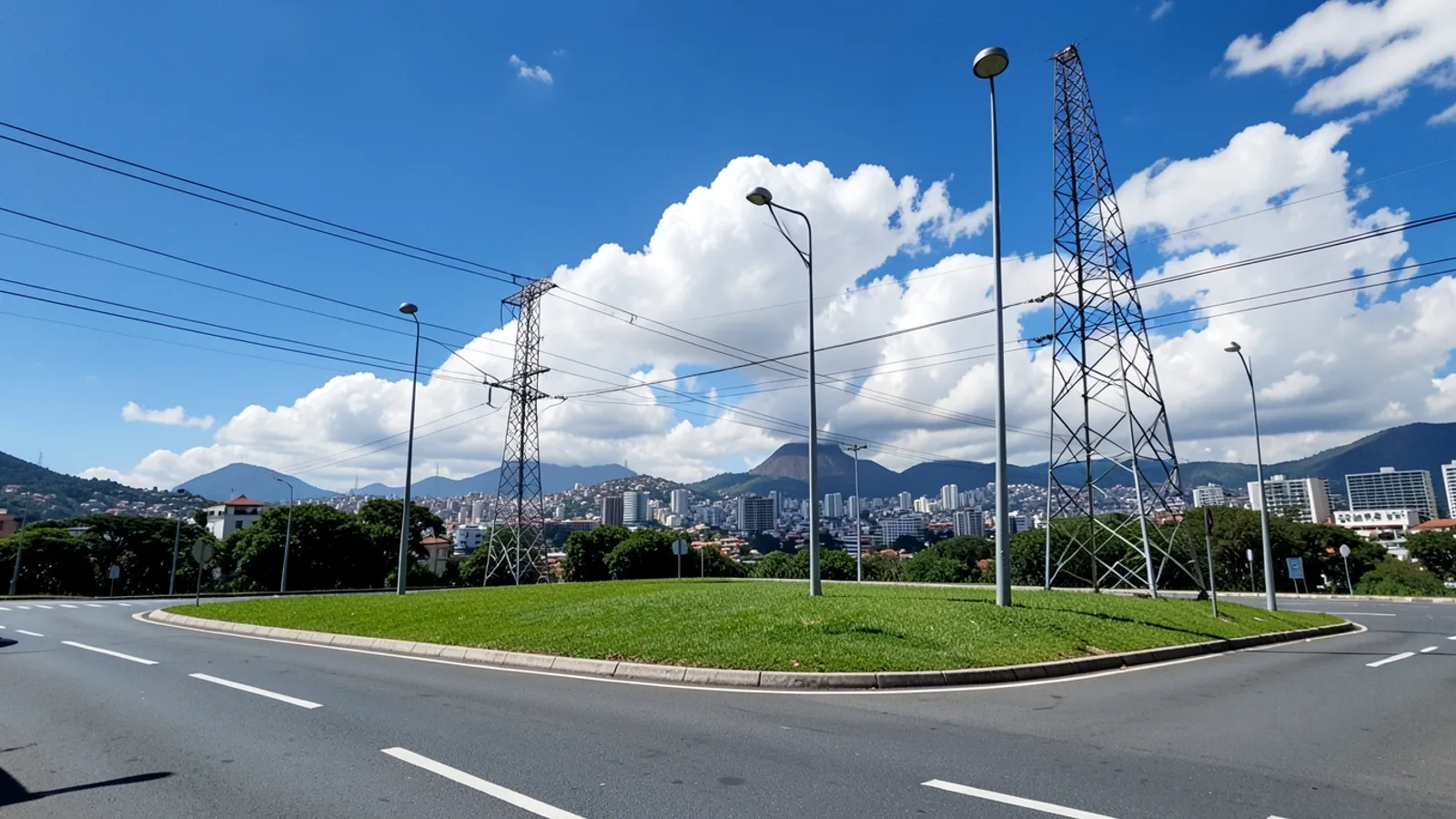
The labour market in Nova Iguaçu reflects the intensity of employment relationships in one of the most populous areas of the state of Rio de Janeiro, with a population of 843,220 inhabitants. The municipality's economy concentrates retail and wholesale trade hubs, logistics and warehousing companies, essential service chains, maintenance workshops, and transport sectors. In an environment with thousands of daily hires, professional coexistence is subject to the rules of the Consolidation of Labour Laws and the fundamental guarantees of the Federal Constitution of 1988. When impasses arise in the payment of wages, disagreements occur at the termination of contracts, or questions emerge regarding excessive working hours, the intervention of an employment lawyer makes it possible to check calculations, interpret contractual clauses, and conduct appropriate procedures before the Labour Court, whose regional jurisdiction in the state of Rio de Janeiro forms part of the structure of the Regional Labour Court of the 1st Region (TRT-1). For those who need to understand the initial steps of legal guidance, accessing the service portal presents the applicable avenues.
Specialised legal assistance in Labour Law is not intended solely for situations of open legal dispute. The advisory support provided by an employment lawyer is of decisive value in clarifying rights before disagreements turn into lengthy disputes, advising workers on trade union classification and assisting in the verification of disciplinary warnings, rest breaks during the working day, and salary supplements. Professional practice relies on the principle of the primacy of reality, according to which the facts actually experienced in the work routine prevail over signed terms or bureaucratic records that do not reflect the day-to-day service. In the search for qualified support, the work of an employment lawyer in Nova Iguaçu meticulously assesses the specific conditions under which the service was performed.
Employment contracts, legal subordination, and fundamental worker rights
The correct characterization of an employment relationship requires the simultaneous presence of objective requirements set forth in Brazilian legislation: habitual nature, remuneration, personal service, and legal subordination to the managerial authority of the service recipient. Across various work routines in the Baixada Fluminense, there is widespread use of hirings labeled as self-employed or the requirement to establish legal entities to issue invoices, even though the providers work fixed hours, receive continuous orders from hierarchical superiors, and lack any autonomy in managing their activities. Faced with this situation, an employment lawyer acts to demonstrate before the Labour Court that such practices constitute an evasion of protective legal provisions, petitioning for the formal recognition of the employment relationship with the respective signing of the Work and Social Security Card.
The judicial recognition of a formal employment contract restores obligations essential to the socio-economic security of the worker. Among these essential duties are the payment of social security contributions intended for the National Social Security Institute and the regularisation of all monthly deposits tied to the Guarantee Fund for Length of Service, plus the statutory update indices provided by law. In addition, frequent disputes involve situations of job deviation or accumulation of duties, when the worker is hired to perform specific tasks, but ends up handling tasks of greater technical complexity without commensurate remuneration. The careful comparison of pay statements with collective bargaining agreements makes it possible to check whether the category wage floors and stipulated additional allowances were respected.
Lawsuits arising from employment relationships in the locality are adjudicated by the Labour Courts under the jurisdiction of the Regional Labour Court of the 1st Region (TRT-1), a regional court headquartered in the city of Rio de Janeiro, the state capital, with the possibility of appeals before the Superior Labour Court, based in Brasília, the federal capital. Procedural conduct complies with the ethical guidelines of the Brazilian Bar Association, it being strictly prohibited for any professional to guarantee successful outcomes or promise certain financial results, with the final decision resting exclusively with the judges who evaluate the case evidence.
Audit of severance payments, overtime hours, and statutory premiums
The moment of termination of the employment contract represents a phase of acute economic vulnerability for the employee and of heightened technical responsibility for the employer. Labour legislation imposes strict deadlines for the payment of final settlements, averting financial penalties resulting from unjustified delays. In the analysis carried out by an employment lawyer, critical audit and calculation points stand out:
- Verification of severance payments: detailed examination of each line item on the termination form, including salary balance, notice period proportional to the length of service (worked or indemnified), accrued and proportional paid leave accompanied by the constitutional one-third bonus, proportional thirteenth-month salary, and the handover of documents to withdraw the FGTS with the forty percent severance indemnity and apply for unemployment insurance;
- Constructive dismissal due to employer fault: characterization of serious contractual breaches by the company, such as repeated delays in wage payments, habitual absence of severance fund deposits, excessive target demands, exposure to manifest danger, or abusive disciplinary severity, enabling termination with all the financial remedies of a dismissal without cause;
- Working hours tracking and overtime: inspection of mechanical, manual, or electronic timesheet records, analysis of hour-bank compensation schemes, and verification of the partial suppression of meal and rest breaks within shifts or between shifts, calculating the applicable premiums and their flow-on effects on paid weekly rest and severance;
- Unhealthy and hazardous work premiums: verification of workplace environmental conditions involving continuous contact with harmful chemical or biological agents, high noise levels, or exposure to flammable substances and high-voltage electricity, checking the provision and technical validity of personal protective equipment;
- Temporary job security and workplace accidents: employment protection arising from medical leave administered by the National Social Security Institute due to a typical workplace accident or an equivalent occupational disease, assessing the right to reinstatement or corresponding compensation for proven material and moral damages.
The timely verification of these rights prevents the limitation periods established in the Federal Constitution from barring legal action. The Brazilian legal system sets a deadline of up to two years following the definitive termination of the contract to file an employment lawsuit, with recovery limited to claims accrued during the five years prior to the filing of the action.
Professional Commutes and Territorial Jurisdiction in the Baixada Fluminense
The geographical location of Nova Iguaçu and its status as a regional urban center in the state of Rio de Janeiro generate an intense circulation of labor between neighboring municipalities. It is common for professionals residing in the city to work daily shifts at companies in nearby areas, just as residents of surrounding areas commute daily to work in commerce and services in Nova Iguaçu. This routine of intermunicipal mobility demands technical attention in the application of territorial jurisdiction rules for the Labour Courts, the classification of collective bargaining agreements, and the timely provision of transportation vouchers.
This dynamic manifests continuously in connection with Mesquita, a municipality located 3.5 km away from Nova Iguaçu. The territorial proximity between the two cities encourages daily commutes by retail clerks, cargo operators, and maintenance workers. In these scenarios, the intervention of an employment lawyer helps determine whether travel time spent under company orders was properly compensated and whether intermunicipal transit vouchers covered actual commuting expenses, preventing unfair deductions from paychecks.
A similar integration occurs in the exchange with Belford Roxo, located 5.3 km from Nova Iguaçu. The routine flow of workers linked to distribution sectors, healthcare services, and industrial units frequently raises questions regarding the classification of temporary workplace transfers and the application of mandatory wage floors for the job category. An employment lawyer examines the signed contract to verify whether changes in work assignments led to wage losses or established the obligation to pay the statutory transfer allowance provided by law.
Another axis of significant professional mobility involves the municipality of Nilópolis, 6.6 km away from Nova Iguaçu. Professionals commuting daily between these locations frequently seek legal assistance to examine the validity of shift schedules, on-call duty, and time spent at the employer's disposal outside standard contractual hours. This network of employment connections also encompasses other cities in the region, such as São João de Meriti (9.5 km away), Queimados (11.7 km away), and Duque de Caxias (14.6 km away). In cases involving subcontracted labor or companies with multiple branch offices, correctly identifying where work was performed ensures that the jurisdiction of the Regional Labour Court of the 1st Region (TRT-1) is invoked without jurisdictional conflicts that delay the proceedings.
Practical guide to gathering evidence before seeking guidance
The technical precision of any legal analysis and the effectiveness of contentious measures before the Labour Court depend directly on the integrity of the evidentiary elements preserved by the worker. To organize records methodically before consulting an employment lawyer, adopting the following step-by-step compilation is recommended:
- Digitize the complete contractual documentation: gather the physical employment booklet with all completed pages or export the official PDF report issued by the Digital Employment Booklet application, including contract amendments, notifications of position changes, and individual employment contracts;
- Collect remuneration statements: archive pay stubs, salary receipts, proof of commissions, and bank statements certifying the exact dates and amounts transferred by the employer during the contract, comparing base salary, paid overtime, and any deductions;
- Issue the detailed FGTS statement: request the updated detailed statement of the linked account from the managing institution, which enables a month-by-month check of the legal rate of eight percent on all earnings received;
- Compile working hours and attendance records: preserve copies, electronic or biometric time card records, photographs of manual time cards, and work schedules recording actual start times, departure times, and the duration of rest and meal breaks;
- Store corporate communications and orders: archive messages exchanged on communication applications with immediate supervisors, written warnings, and corporate emails demonstrating demands for overtime, after-hours orders, or excessive pressure regarding performance targets;
- Keep health certificates and medical reports: in cases of leave due to illness, extreme exhaustion, or workplace accidents, organize medical certificates, copies of the Work Accident Report, clinical treatment records, and expert medical reports contemporaneous with the events.
By compiling these records in chronological order, the individual equips this professional with solid support to quantify amounts owed, calculate remuneration differences, and formulate consistent arguments before the judicial authority.
Ethical service and connecting with professionals through the app
The professional practice of law strictly complies with the guidelines of the Code of Ethics and Discipline of the Brazilian Bar Association. When providing consultative guidance or litigating before the Labour Court, an employment lawyer must govern their conduct by technical independence and complete transparency. It is expressly prohibited to promise guaranteed results or ensure victory in legal disputes, as the evaluation of evidence and the final ruling belong exclusively to the competent judges. Citizens who prove an insufficiency of financial resources rely on the Public Defender's Office to ensure full and free legal representation.
In the private sector, defining legal fees is a fundamental prerequisite for mutual security and clarity. The amounts set for consultations, the percentages applied to any settled claims, and the responsibility for procedural costs must be formalized in writing in a legal services contract before initiating any legal steps, ensuring reciprocal predictability.
To simplify access to specialized guidance in Nova Iguaçu, our app offers a practical, confidential, and direct way to connect. Users describe what happened at work in their own words, using a voice recording or text message, completely free of charge and without needing to register in advance with a login or password on the tool. Next, an assistant organizes the details provided into an objective case summary and directs the request to lawyers corresponding to the relevant area of legal practice in the city.
The decision regarding which professional to contact rests exclusively with the user. The lawyers maintain a published page on the platform where they detail their practice areas and respond to submitted requests. The interaction takes place in a private environment within the app itself and only progresses to a formal hiring when both parties agree to proceed with the service, ensuring that personal contact details are not exposed prior to this mutual consent.
If you have questions regarding severance pay, uncompensated overtime, missing FGTS deposits, or irregularities in the fulfillment of your contract in Nova Iguaçu and neighboring municipalities, describe your situation in the app to talk privately on the initial platform with an employment lawyer of your choice, agree upon fees in writing before work begins, and clarify your rights with technical responsibility and transparency, without any promise of results.
Nova Iguaçu and surroundings
Lawyers who practise in Nova Iguaçu also take cases from nearby cities.
How it works
- Tell the case
By voice or text, no sign-in. It takes a few minutes.
- The assistant organises it
Facts, dates and documents become a clear summary.
- You choose the lawyer
Professionals who practise in Nova Iguaçu, in alphabetical order.
Legalocal does not recommend or rank professionals: the list follows alphabetical order.
Frequently asked questions about Nova Iguaçu
What does an employment lawyer do during contract termination in Nova Iguaçu?
In Nova Iguaçu, a municipality with 843,220 inhabitants in the state of Rio de Janeiro, a labor lawyer checks the calculation of amounts due upon contract termination, such as notice period, remaining salary, vacation pay, and release of the FGTS with the forty percent penalty. For routines involving commutes to neighboring municipalities, such as Mesquita, which is 3.5 km away, the professional also examines the regular provision of transportation vouchers before the Labour Court, linked to the Regional Labour Court of the 1st Region (TRT-1).
Can someone who lives in Nova Iguaçu and works in Belford Roxo access the Labour Court?
Workers who reside in Nova Iguaçu and provide services in bordering municipalities, such as Belford Roxo, located 5.3 km away, submit their claims to the territorial jurisdiction rules of the Labour Court. The definition of the procedural venue considers the place of hiring or service provision, ensuring the regular handling of measures within the scope of the Regional Labour Court of the 1st Region (TRT-1).
How does a labor lawyer evaluate overtime hours and breaks in the region?
A labor lawyer evaluates the authenticity of mechanical, manual, or electronic time clock records, the validity of compensation agreements, and the granting of rest breaks. For workers commuting between Nova Iguaçu and Nilópolis, situated 6.6 km away, documentary review verifies whether overtime or on-call periods were compensated with the proper statutory premiums, without any promise or guarantee of outcome.
How does the app work to contact a labor lawyer in Nova Iguaçu?
The user describes what happened in their work environment in their own words, by audio or text, free of charge and without a login. An assistant organizes the information into a case summary and directs the user to local professionals in the field. The choice of which lawyer to contact rests exclusively with the user, in a private conversation on the app that proceeds only if both parties agree, keeping data protected. Legal fees are agreed upon in writing before the start of work.